

The medical profession, like other professions that involve a high degree of social responsibility, is governed by a set of ethical and deontological standards that seek to guarantee quality and integrity in patient care. In Spain, these principles are included in the Code of Medical Deontology (hereinafter, “CDM“), prepared and updated by the Collegiate Medical Organization (OMC), which acts as an essential guide for health professionals in their daily practice.
The CDM establishes the duties and obligations of doctors both towards their patients and towards society, other health professionals and the profession itself. The CDM addresses clinical and technical aspects of medical practice, including guidelines on the doctor-patient relationship, professional secrecy, medical research, continuing education and professional responsibility, among other topics.
The CDM also regulates interactions between doctors themselves, underlining the importance of mutual respect between professionals, and establishing that doctors must treat each other with courtesy, and that criticism must be constructive and made in a respectful manner, avoiding comments that could damage the reputation of other doctors. Likewise, the CDM establishes that the hierarchical relationship between doctors cannot lead to situations of dominance or abuse.
The responsibility to protect and ensure compliance with the CDM falls mainly on the Medical Associations. These associations are professional institutions that not only bring together registered doctors to defend their interests, but also have the function of ensuring the correct exercise of the medical profession and, particularly, compliance with the ethical and deontological principles established in the CDM. In the territorial scope of the Autonomous Community of the Balearic Islands, this supervisory function falls on the Official College of Physicians of the Balearic Islands (hereinafter, “COMIB“).
The sanctioning procedure is the mechanism available to the Medical Associations to ensure due compliance with the CDM, and the procedure may end, in the event that the responsible commission of an infraction is confirmed, with the imposition of important sanctions such as fines, reprimands (private or public), or even with the temporary suspension of the exercise of the profession.
Within the area of responsibility of the COMIB, the sanctioning procedure is regulated in Title VI of its Statutes. The sanctioning procedure is typically initiated following a complaint or complaint made by patients or by professional colleagues. In our experience before the COMIB, after receiving a complaint or complaint, a period of allegations is granted to the accused so that he can offer his version of the facts and, then, it is proposed to hold an interview with the accused professional and with the complainant. Although it is not mandatory, we recommend that any doctor who is summoned to this interview be accompanied by a legal advisor, since, despite the close and informal tone of the interview, they may be asked compromising questions, and the answers offered then can be used as evidence against them during the sanctioning procedure.
After this, the COMIB requests the issuance of a Report by the COMIB Ethics Commission to rule on the convenience of formally initiating a sanctioning procedure for the reported facts. In the event that said Ethics Commission considers that there are no reasons that recommend opening a sanctioning procedure, the complaint will be archived; Otherwise, the initiation of a sanctioning procedure will be agreed upon.
It should be noted that this Report of the Ethics Commission to which we have just referred is issued before the start of the sanctioning procedure and, therefore, before the accused can exercise the rights of defense that correspond to him, including, of course, the right to propose exculpatory evidence. Therefore, the Report of the Ethics Commission issued at this stage cannot, in our opinion, have as its objective the ruling on whether or not an infraction has been committed, but merely on whether there is sufficient evidence to advise the initiation of a sanctioning procedure. Any decision that exceeds this level of analysis could be conditioning the direction of the subsequent sanctioning procedure and, therefore, violating basic principles of the sanctioning procedure, including the principle of presumption of innocence of the accused.
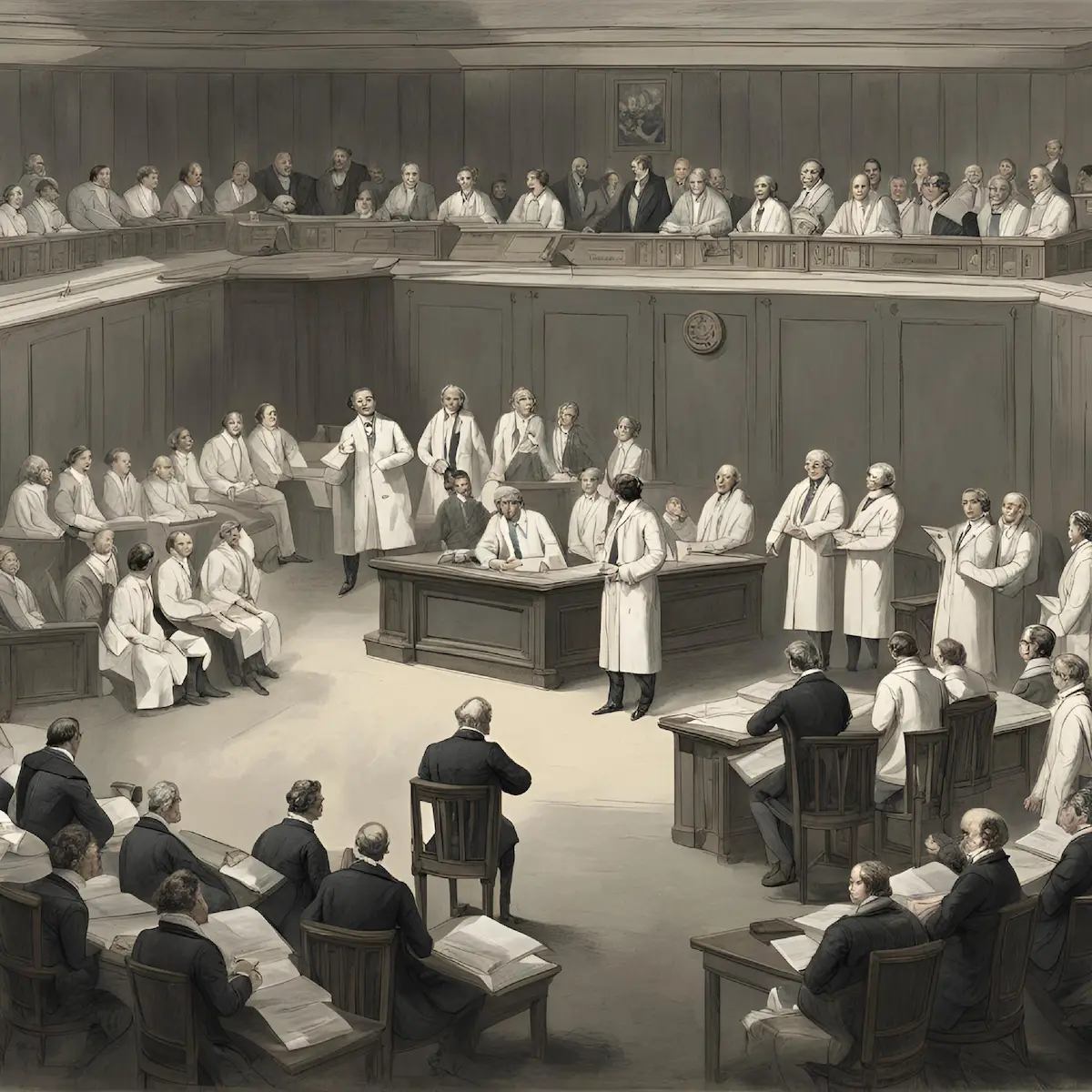
The sanctioning procedure before the College of Physicians is developed, in general, following the same phases and applying the same guarantees as a common sanctioning procedure. This includes the application of principles such as legality, typicality, responsibility, proportionality, among others. However, a particularity of these procedures is that they are instructed and processed by personnel from the medical profession itself. The purpose is for the doctors themselves to judge their colleagues, which ensures a high degree of professionalization in the investigation of the facts and in the classification of alleged infractions.
However, due to the limited number of sanctioning files processed by the Medical Associations and, above all, the lack of specific legal training of many of those involved, in our experience, it is not uncommon for errors to occur in the processing of procedures or for decisions to be adopted that significantly violate the guarantees of the parties involved. For this reason, we insist on the importance of the parties involved in these types of procedures having specialized legal advice.
At Araújo&Benetti, based in Palma de Mallorca, we are specialists in Administrative Law and we have extensive experience in sanctioning procedures, including procedures processed before Medical Associations, so do not hesitate to contact us if you require advice in this area.
The content of this publication is for informational purposes only. Any decision or action based on its content must be subject to appropriate professional advice.